Personal product
MyLifeLang
Learn Spanish and Japanese from the sentences you actually say.
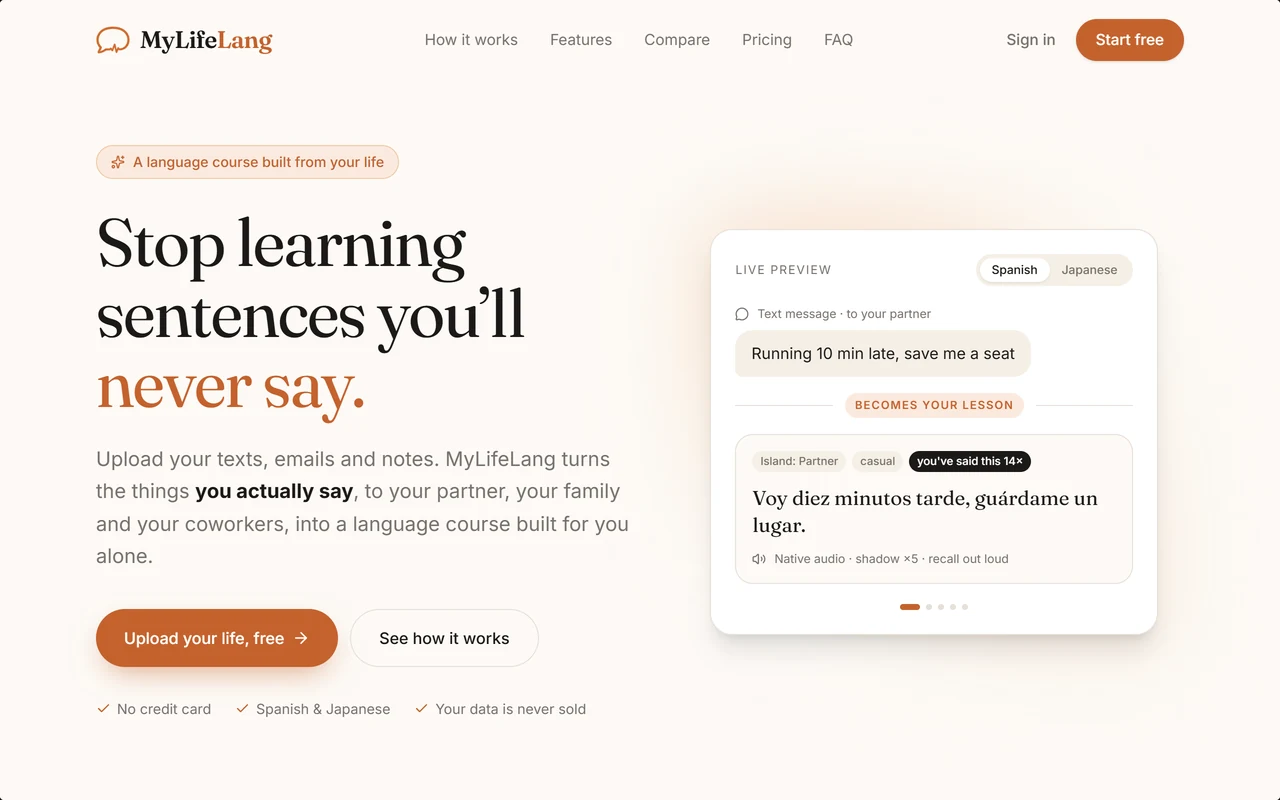
The landing page
The idea
Most language apps teach sentences like "the cat drinks milk." People spend years on them and still can't tell their family about their day. MyLifeLang teaches you the sentences you actually say, to the people in your life, following a polyglot's method of learning your own "language islands."
Research first
Before designing anything I wrote a research brief on why some apps become habits and others get deleted: Duolingo's retention work, the Fogg behavior model, the Hooked model, studies on how long habits take to form, self-determination theory, onboarding teardowns of Speak, Calm and Headspace, and the ethics of dark patterns.
That became a product ethos with 12 principles and a list of things the app never does: no guilt, no crying mascot, no hearts or energy that block practice.
Changing course from what I learned
The app went through three versions. It started as a general course, became a course built from your own sentences, and then added streaks, XP and a mascot once the research showed what streaks do for habit. The streak never punishes a missed day. Rest days and an automatic repair keep it kind.
The product
You listen, read along, repeat out loud, and then say each sentence from memory. Spaced repetition brings it back right before you'd forget it. There is role-play, a listen-on-the-go playlist, and memory hooks for new words.
Claude handles translation, feedback and role-play through ten features that return structured answers, and every one has a manual fallback so the app still works without it.
Checking the craft automatically
I built a review loop that screenshots every screen on an iPhone frame and a PC, checks for problems like sideways scrolling, tap targets that are too small and inputs that make an iPhone zoom, and ranks what it finds. It runs on every push.
More screens
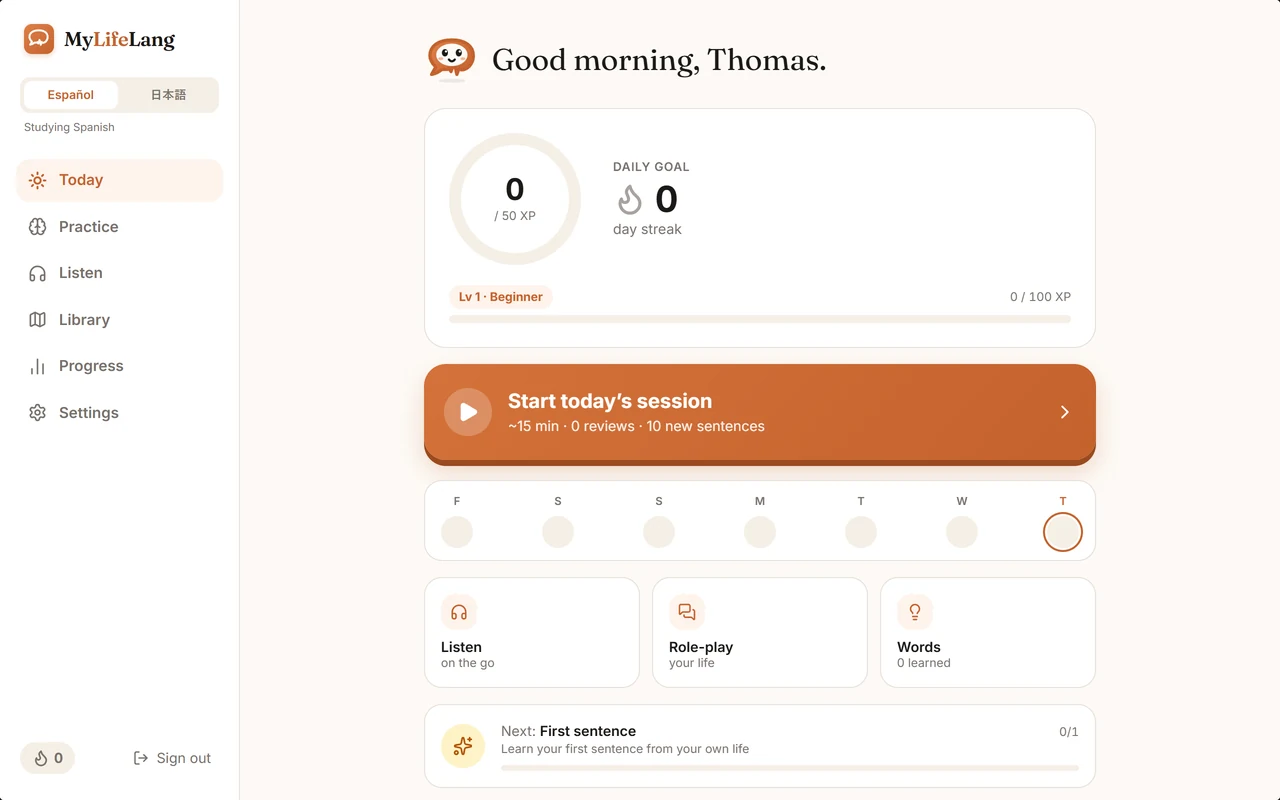
Today: the daily goal, the streak and one obvious next step
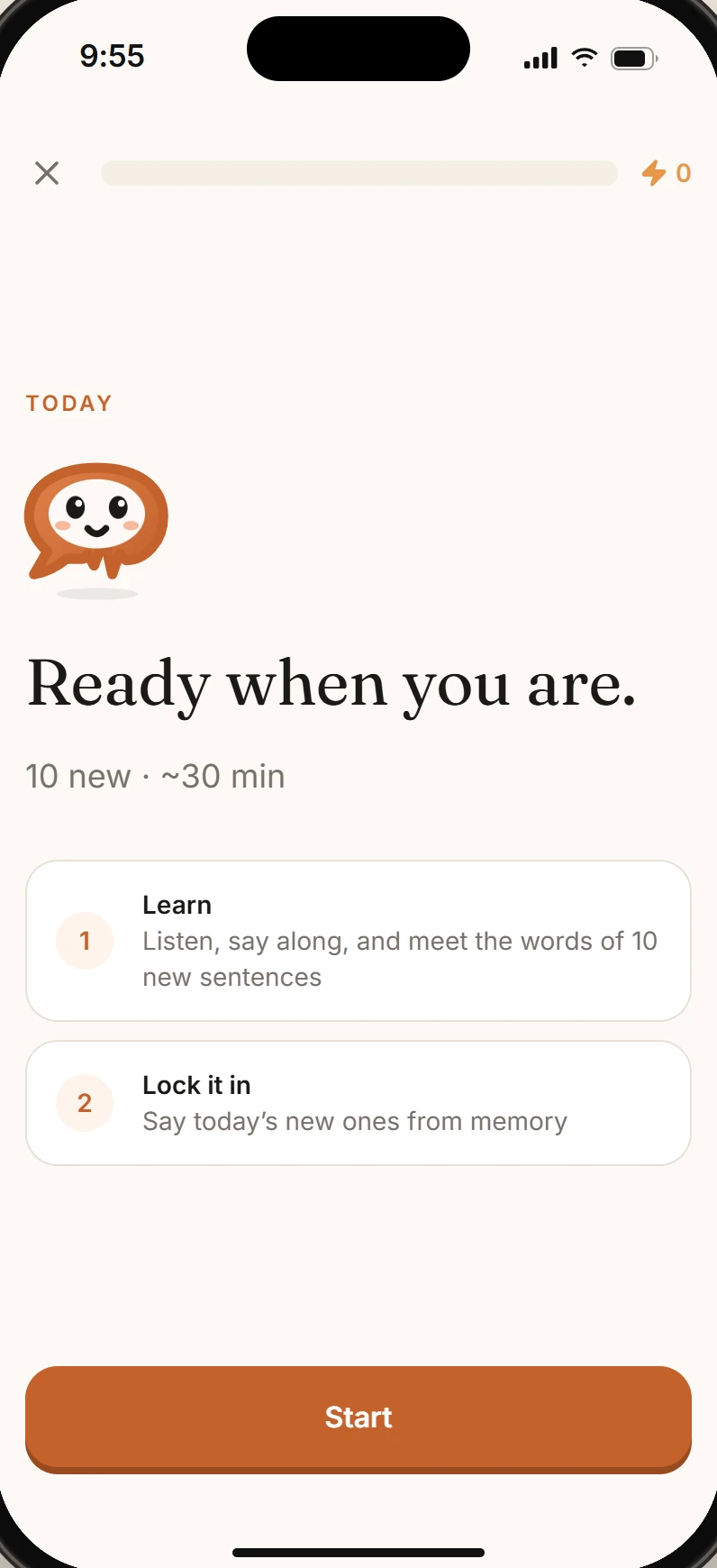
A daily session on a phone