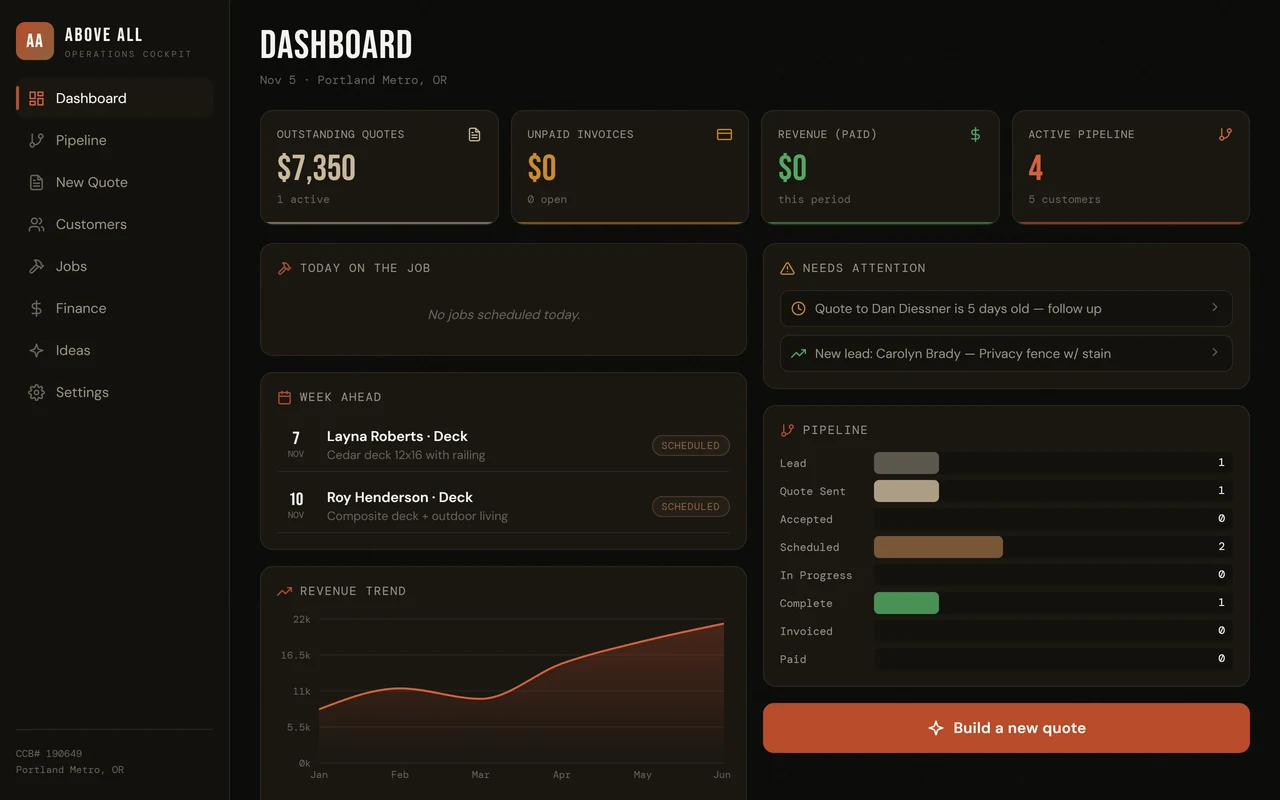
An early prototype of the dashboard, shown with demo data
The problem
The owner's business lived in four places: his Gmail, his calendar, hand-built estimate PDFs and QuickBooks. There was no single view of who needed a call back, which jobs were coming up, or who still owed money.
What I built
Instead of asking a busy owner to type everything in, The Post built the records from what already existed, with read-only access. It rebuilt 47 jobs and 46 deals from the calendar and the estimates, found 13 website leads that the old contact form had hidden behind a no-reply address, and showed every thread where a customer was waiting on a reply. It also tracked crew hours for payroll.
Designed from the real data
I started the redesign from measured gaps, not guesses: none of 573 emails were linked to a job, and none of 84 contacts had a phone number. The owner's top pain, who has paid and who still owes, came first.
Where AI fits
I wrote one rule for the whole app: AI handles judgment, extraction and summaries, and plain code handles money, dates and access. When the owner didn't want an ongoing AI bill, I moved the AI work into my own working sessions instead of a paid service.
Knowing when to stop building
As the business grew, a ready-made tool fit better. I researched Jobber, recommended it, and retired the parts of my own app that it now covers. The parts Jobber doesn't do are still in use.