At work · OMIC USA
Lab Support
A help desk for a 60-person lab, from the pitch to the launch.
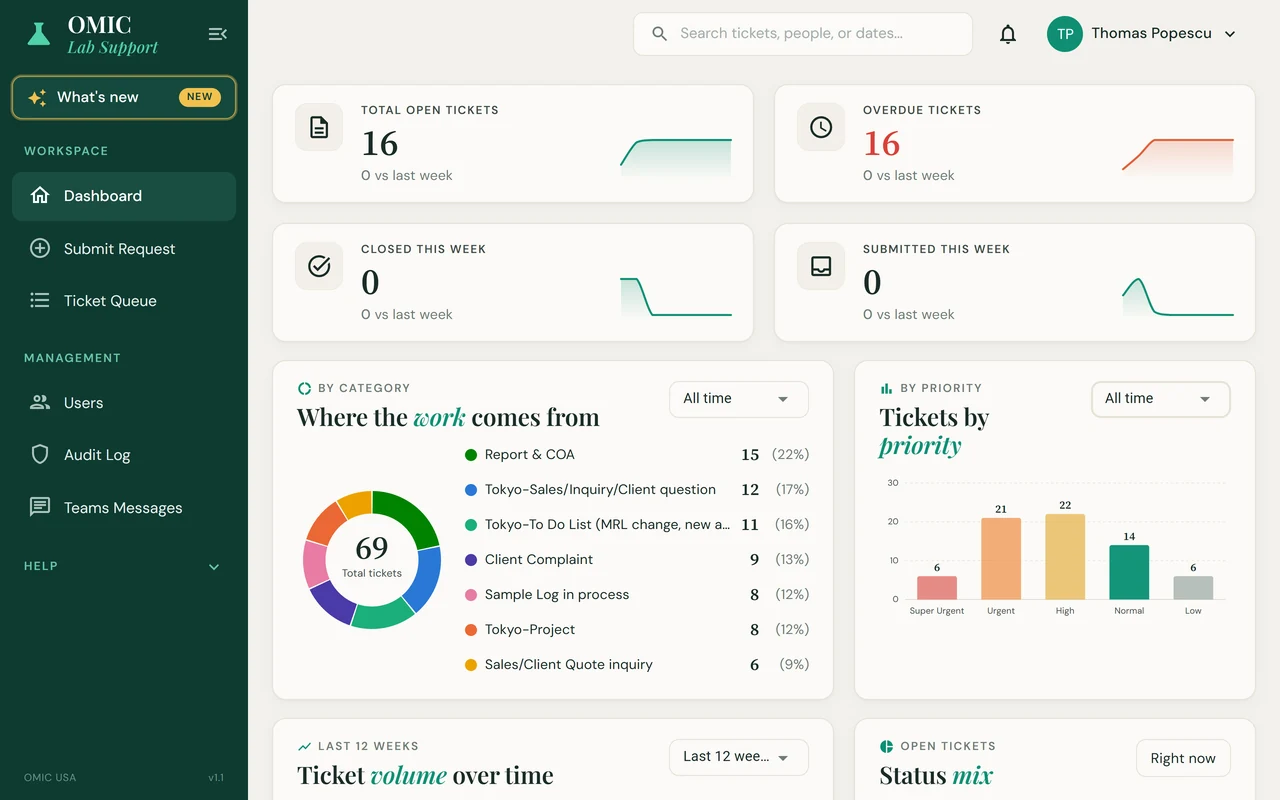
The dashboard: open and overdue tickets, where the work comes from, and tickets by priority (practice data)
The problem
Requests between the lab, customer service and our office in Tokyo lived in email, Teams messages and hallway conversations. Nobody knew who owned a request, nothing had a deadline, and the lab manager had no way to see what was running late.
A colleague had prototyped a fix in SharePoint and Power Automate. It couldn't keep up: the form was rigid, the list didn't work as a queue, and there was no way to track deadlines or report on anything.
Discovery
I wrote a short proposal and a click-through presentation that answered the obvious questions before anyone had to ask them, then demoed a working build to the lab manager and two group leaders.
Her notes from that meeting became the plan: her seven categories, five priority levels, an audit trail on every ticket, and separate "assigned to me" and "I submitted" views, because the group leaders had found a single list confusing. I shipped it on her date, four days later.
Edge cases I caught
Her deadline rules mixed calendar time and business hours. Read literally, a High ticket would have had a later deadline than a Normal one. I raised it with her in writing and shipped with a written assumption instead of guessing.
Before launch I found that every seeded email address used the wrong format, so every notification would have bounced, that the server was running a build two months old, and that local test runs were writing demo data into production. All three were fixed before anyone logged in.
After launch
Every comment goes into a backlog in the person's own words, with who said it and when. I shipped two updates within five days, wrote the notification rules as a table plus a 9-case test script, and turned email on for one tester before turning it on for everyone.
To help people actually use it, I made a 14-section manual with 39 screenshots, four short walkthrough videos and an in-app What's New page.
How I used Claude
Claude Code co-authored every commit. The project's instructions include a rule I added after Claude once told me the database was backed up when it wasn't: never state anything that hasn't been checked. Mistakes are written down in the project log so they don't happen twice.
More screens
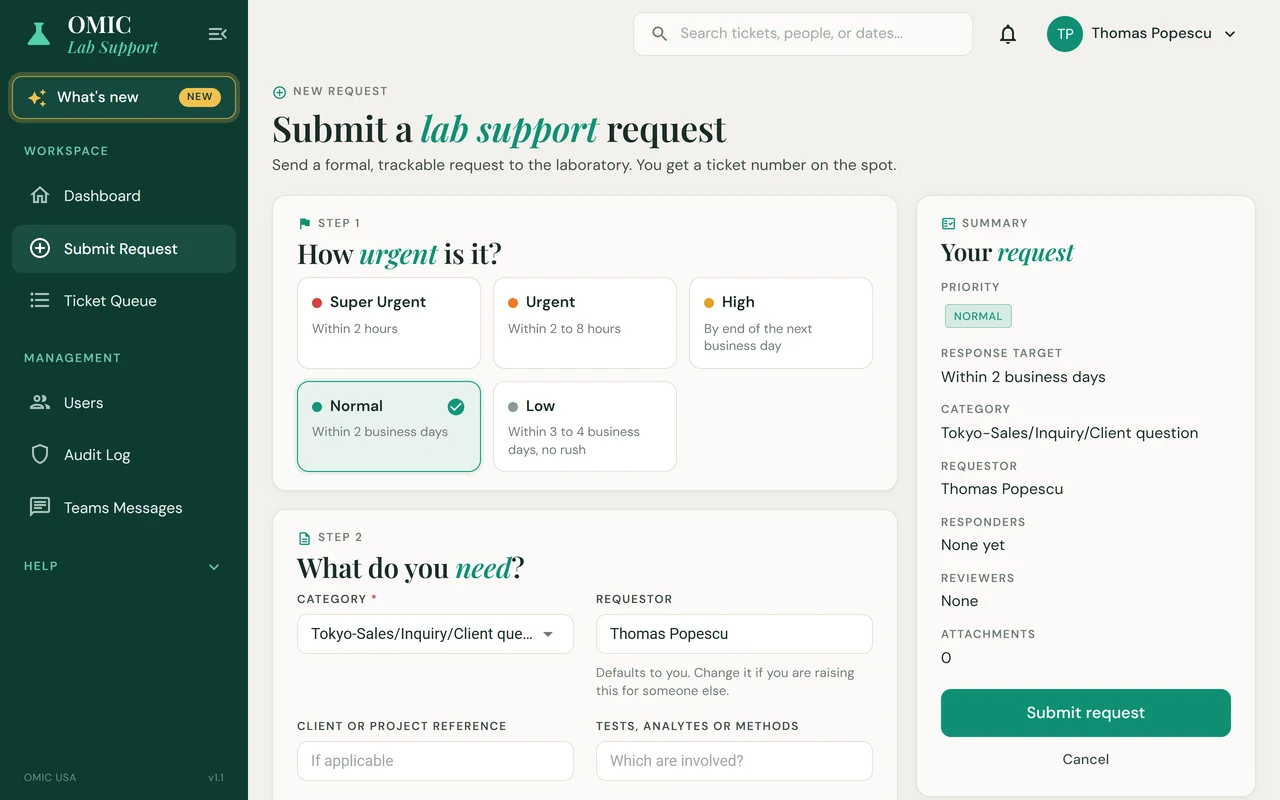
Submitting a request: pick how urgent it is, see the deadline it gets, and a live summary of the request
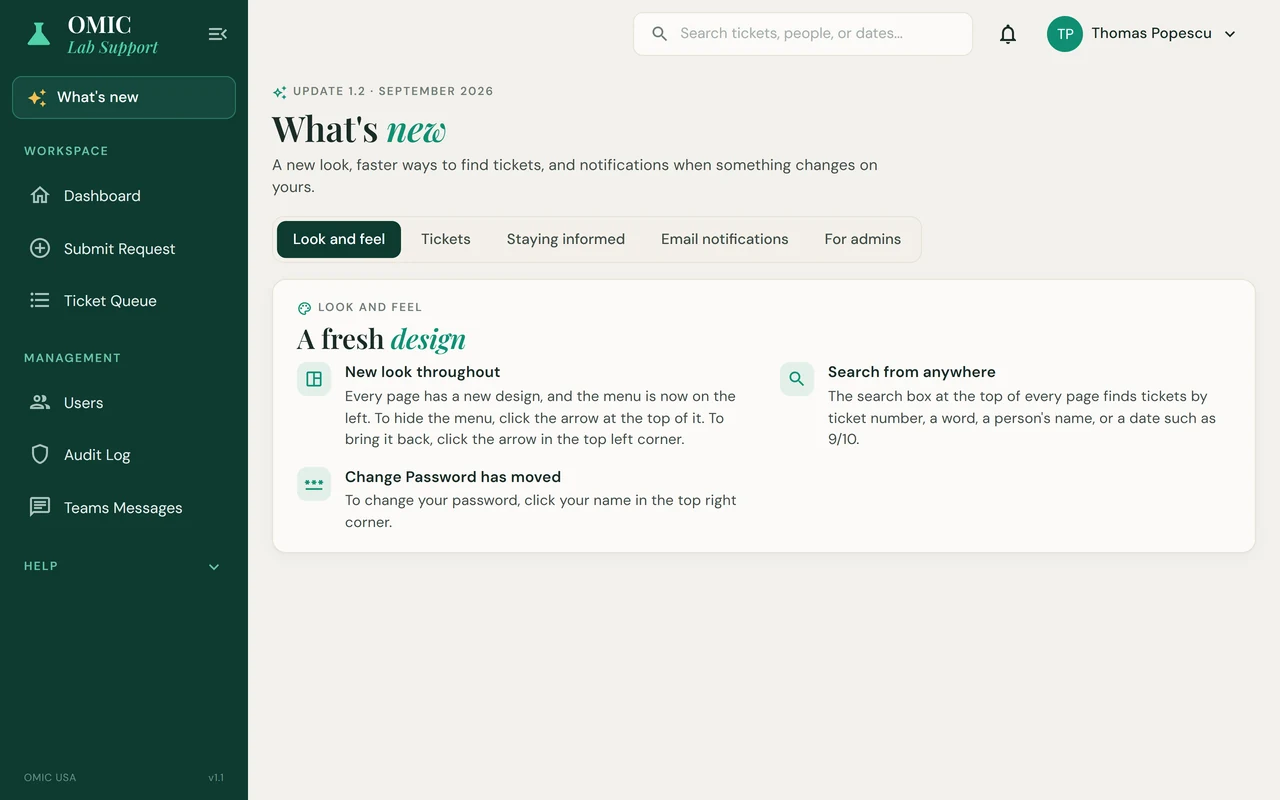
The in-app What's New page that walks people through each update